
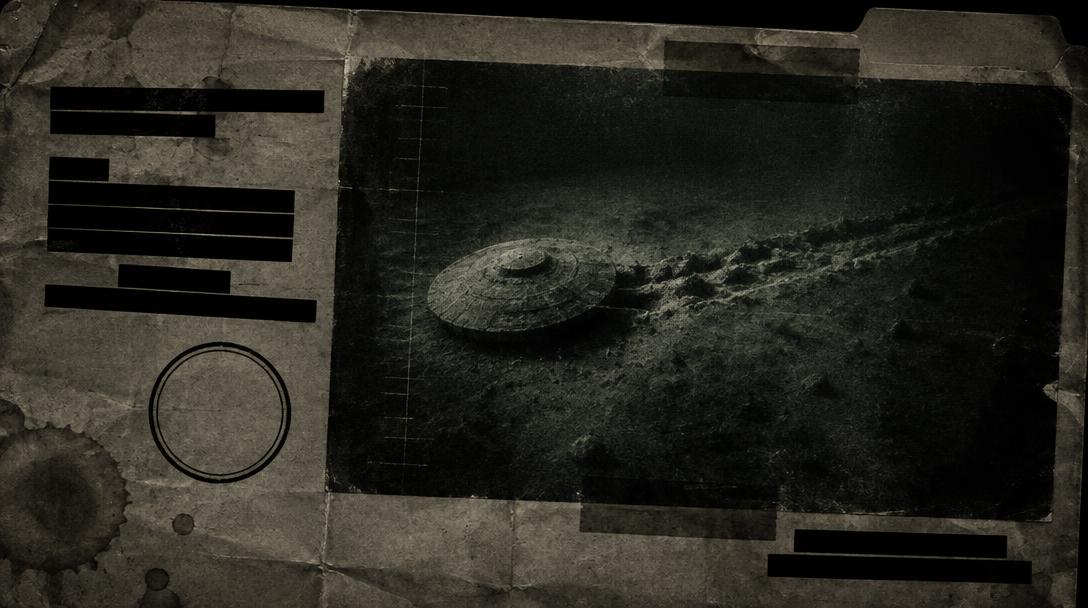
The Baltic Sea Anomaly
Two Swedish treasure hunters looking for shipwrecks and vintage champagne instead found a 60-metre circular thing on the seabed between Sweden and Finland, complete with what looked like a runway scraped behind it. The internet immediately identified it as the Millennium Falcon. The geologists identified it as a rock.
Why it was classified
Nothing was ever classified. Peter Lindberg and Dennis Åsberg of the Ocean X Team were running side-scan sonar in the Gulf of Bothnia when a low-resolution image came back showing a disc-shaped mass with a 300-metre drag trail. Side-scan sonar builds pictures from timing and reflected sound rather than light, and it is notoriously good at producing tidy geometry out of untidy seabed. The team, to their credit, said from the start that they did not know what it was. Everyone else was considerably more certain.
Why it matters
The competing explanations arrived in ascending order of enthusiasm: a glacial deposit or moraine left by the retreating ice sheet; a sunken WWII-era anti-submarine device, sometimes specified as a German Wullenweber-style antenna array, dropped there to jam Soviet transmissions; and the fringe favourite, a crashed craft or an ancient structure from before the Baltic flooded. Divers reached it in 2012, and geologists who examined the recovered samples — including Volker Brüchert at Stockholm University — reported granites, gneisses and sandstone consistent with rocks dropped by glacial ice, the ordinary furniture of a seabed that spent the last ice age underneath a glacier. Later analysis of the surrounding limestone found nothing manufactured. What the Anomaly really demonstrates is that a blurry image plus a plausible silhouette will outrun a rock sample every single time, and that the phrase 'scientists are baffled' is usually doing a great deal of unpaid work.
Where was it, then?
The theories have not gone quietly. The anti-submarine-device camp holds that the object is Nazi hardware and the drag trail is where it slid on impact, which is a satisfying story with no supporting wreck, serial number, or record of anyone dropping a 60-metre antenna into the Baltic and forgetting about it. The UFO camp reads the trail the other way — a controlled skid by something that arrived from above — and treats the divers' reported equipment malfunctions near the site as evidence of interference, rather than as what routinely happens to electronics 90 metres down in cold brackish water. A third group prefers a pre-flood structure from when the Baltic basin was dry land after the last glaciation, which at least gets the geology roughly the right era before going off a cliff. All of this is speculation. The samples remain rock, and rock is a poor conversationalist.