
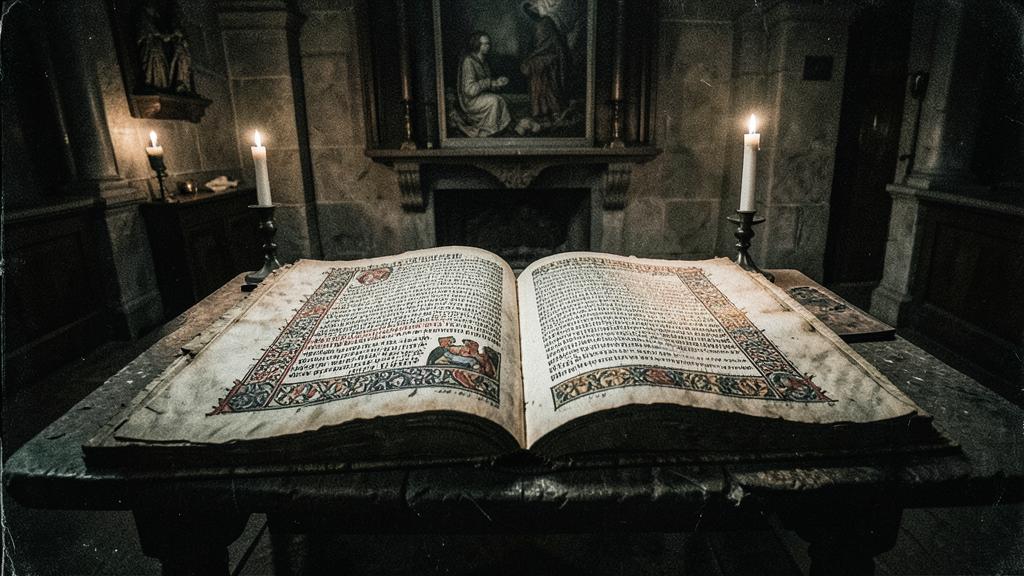
Codex Gigas — The Devil's Bible
The largest surviving medieval illuminated manuscript: 310 surviving pages (there were once more), around 165 pounds, written on vellum made from the skins of over a hundred donkeys or calves. It contains the full Latin Bible plus assorted medieval knowledge, and on folio 290 a full-page portrait of Satan, which is the reason nobody calls it by its actual name.
Why it was classified
Not classified — but attached to it is one of the better legends in bookbinding. As the story goes, a monk broke his vows and was sentenced to be walled up alive; to buy his way out he promised to write, in a single night, a book containing all human knowledge that would glorify the monastery forever. Around midnight he did the arithmetic, concluded that this was not going to happen, and prayed to Lucifer for help. The devil's portrait was added afterward, out of gratitude or terror depending on who is telling it. Later tradition names the monk Herman the Recluse. Treat all of this as folklore, not record.
Why it matters
The legend may rest on a translation problem: the monastery's necrology lists a Herman tagged 'inclusus', which in practice meant a monk who chose to live sealed in a cell as a recluse — a vocation, not a sentence. Modern paleography finds the handwriting uniform from end to end, which points to one scribe working steadily for what was probably decades rather than one very productive evening. The verified history is dramatic enough without demons: the book sat in Rudolf II's imperial collection in Prague until Swedish troops carried it off as war booty during the 1648 sack of Prague in the closing days of the Thirty Years' War, and it has lived in Stockholm ever since, leaving exactly once — a loan back to Prague's National Library for an exhibition from September 2007 to January 2008. It is also routinely confused with the Codex Argenteus, the 'Silver Bible', an entirely different manuscript on permanent display at Carolina Rediviva in Uppsala.