
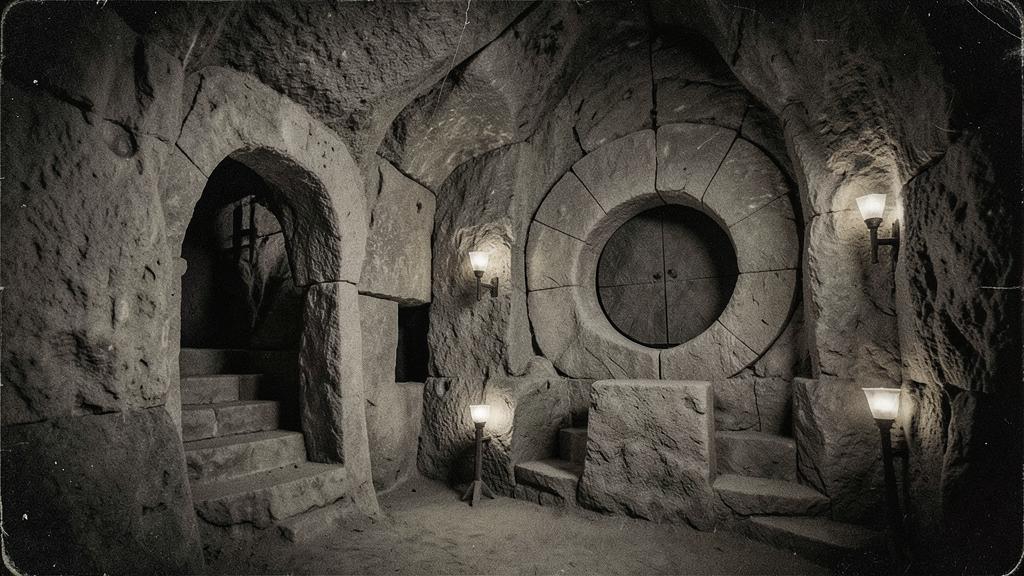
Derinkuyu — The City Under the Basement
A man in the Turkish town of Derinkuyu knocked down a wall during a home renovation in 1963 and found a tunnel. The tunnel led to a room. The room led to a city carved eighteen storeys down into volcanic rock, with capacity estimated in the thousands of people, plus their livestock.
Why it was classified
It was not classified; it was simply sealed and forgotten. Soft tuff rock made it possible to carve, and repeated invasions made it necessary. The complex includes ventilation shafts running the full depth, wells, stables, storerooms, wine and oil presses, chapels, and — the detail that tells you what it was for — enormous circular stone doors, up to half a tonne, that could only be rolled shut from the inside.
Why it matters
Derinkuyu is the largest excavated of more than two hundred known underground settlements in Cappadocia, several of them linked by tunnels kilometres long. It was used by early Christian communities sheltering from Roman and later Arab raids, and locals were still using the upper levels for storage into the twentieth century. There is no need for an exotic explanation here and the real one is better: no lost technology, no visitors, just people who decided that the correct response to being invaded repeatedly was to make the ground itself habitable and then go quiet for a few months.