The Holy Family — A Fiction in Four Lives
A made-up story that stamps itself as one. We follow Yeshua of Nazareth, his cousin John the Baptist, Miriam of Magdala and the children through an invented chronicle, set in the gaps where the sources go quiet. Not history, not a claim, not a conspiracy — a story that knows it is a story.
Why it was classified
Once, in Nazareth, there were two boys who could not have been more different and who shared every summer anyway. Yeshua was the carpenter's son: he asked too many questions in the synagogue and put the tools back in the wrong places. John was his mother's cousin's boy, raised across the Jordan, and he never asked a question he did not already know the answer to. Their mothers, Miriam and Elisheva, walked the two-day road between the villages every spring with the children on their backs, and on those roads the boys learned the stories they would later be remembered for. In the story, Yeshua grows up, and at thirty he walks to the river to see his cousin — because John had gone strange and holy, dressed in camel hair, eating honey he did not pay for, and telling everyone who would listen that the water was about to matter. Yeshua stepped in, and John looked at him the way you look at a brother who has just grown taller than you. After that everything moved: a wedding in Cana where the wine did not run out, a hillside with more people than bread, fishermen who kept forgetting their nets. And through all of it, at the edge of every scene the painters later forgot to look at, stood Miriam of Magdala — who paid for the road out of her own purse, remembered every word, and understood the teaching better than the men arguing about it.
Why it matters
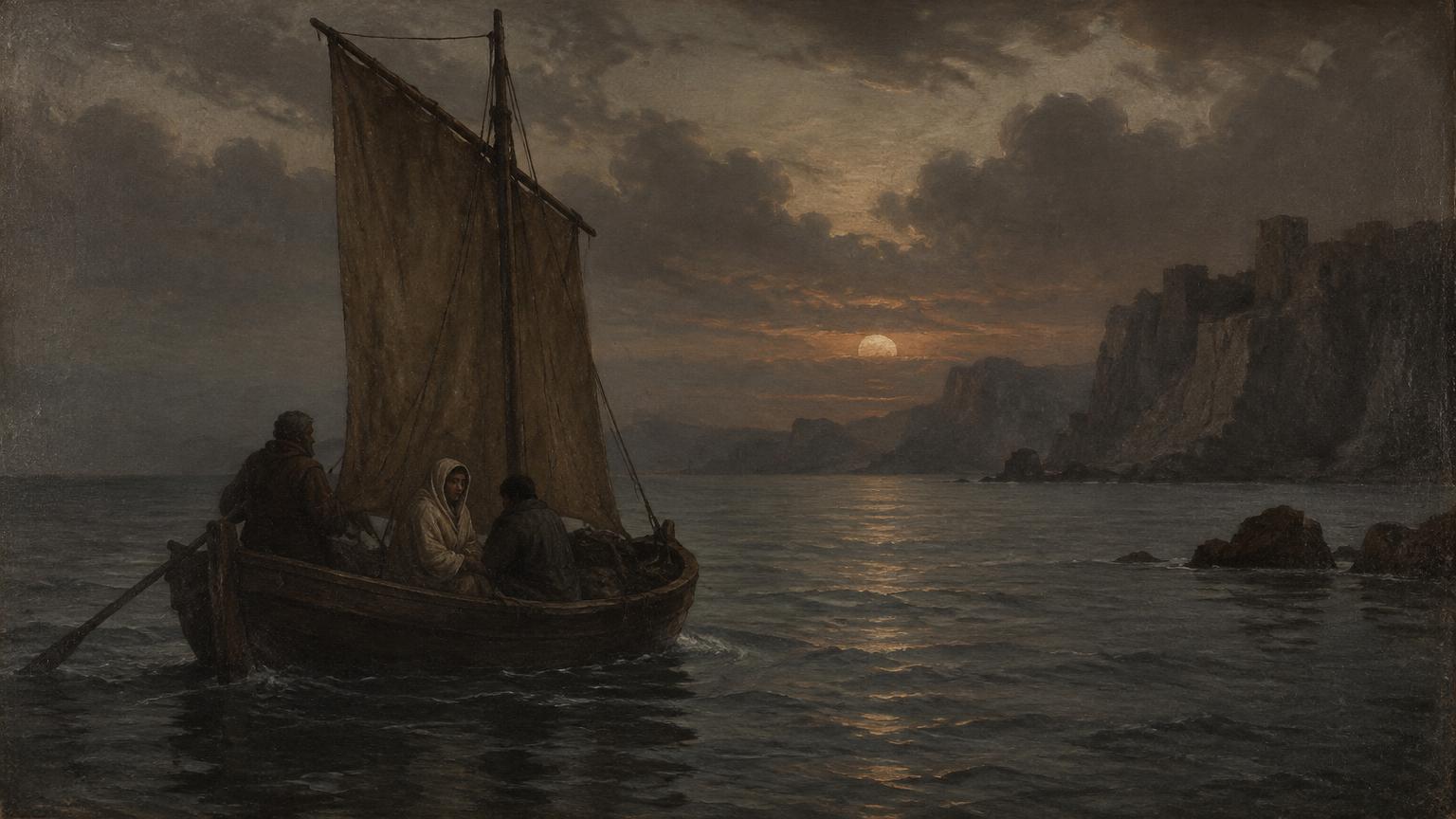
The story gives them children, a boy and a girl, because someone was going to invent them anyway, and they might as well arrive gently. After Jerusalem it does not end at the tomb: it says that Miriam, the children and a small boat of friends crossed the sea to Gaul, where Miriam of Magdala taught under a fig tree and kept bees above the lavender fields; that the girl grew up fluent in three languages and one silence; that John's disciples and the family kept up a correspondence of carried letters; and that an old man with a carpenter's hands spent his last years near Glastonbury, building tables and complaining about the rain. And there the file stamps itself. None of this is history. The real Miriam of Magdala was most likely a woman of means from the town of Magdala and a supporter of the movement; the real John died violently in a prison; the Gospels do mention brothers of Jesus, which has kept the debate alive for two thousand years, and there is not one bone, document or honest rumour of a descendant anywhere. The fiction borrows their names the way tools are borrowed: returned at the door, wiped clean. The real story — a Galilean movement that changed the world, a woman remembered in every Gospel, a cousin whose voice carried — needed no invention at all. It simply has gaps, and this is what a story looks like when it walks into one.