
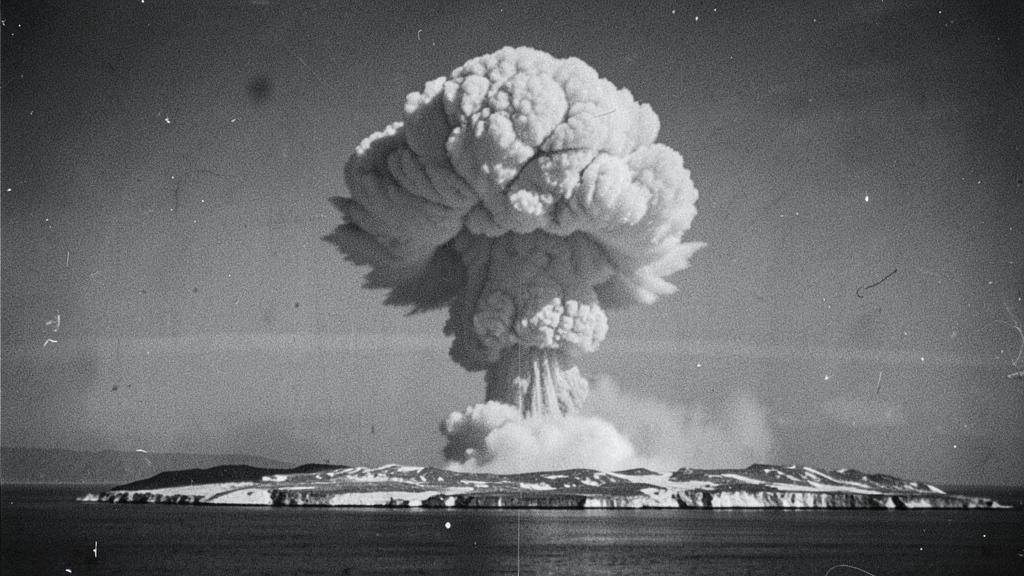
Tsar Bomba — RDS-220 Test Report
The Soviet Union built a bomb so large it had to be scaled down before anyone would agree to drop it. The original design ran to roughly 100 megatons; engineers halved it to about 50 by swapping a uranium tamper for lead, which is the only recorded instance of a weapons program deciding something was too much. It still produced the largest man-made explosion in history, over Novaya Zemlya, in front of a camera crew.
Why it was classified
Everything about it: the two-stage-plus configuration, the yield-tuning trick, and the uncomfortable fact that no aircraft in the inventory could carry the thing without modification. The Tu-95 had its bomb bay doors and fuselage fuel tanks removed, was painted reflective white, and the bomb was lowered under an 800-kilogram parachute purely to give the crew a head start on their own device. Their calculated survival odds were about fifty percent.
Why it matters
The shockwave circled the globe several times and was still measurable on its third lap; the mushroom cloud punched into the stratosphere at roughly seven times the cruising altitude of an airliner. Militarily it was useless — too heavy to deliver, too big for any target — which was the point. It was an argument, delivered at 50 megatons, that the arms race had passed the last exit marked 'reasonable'.